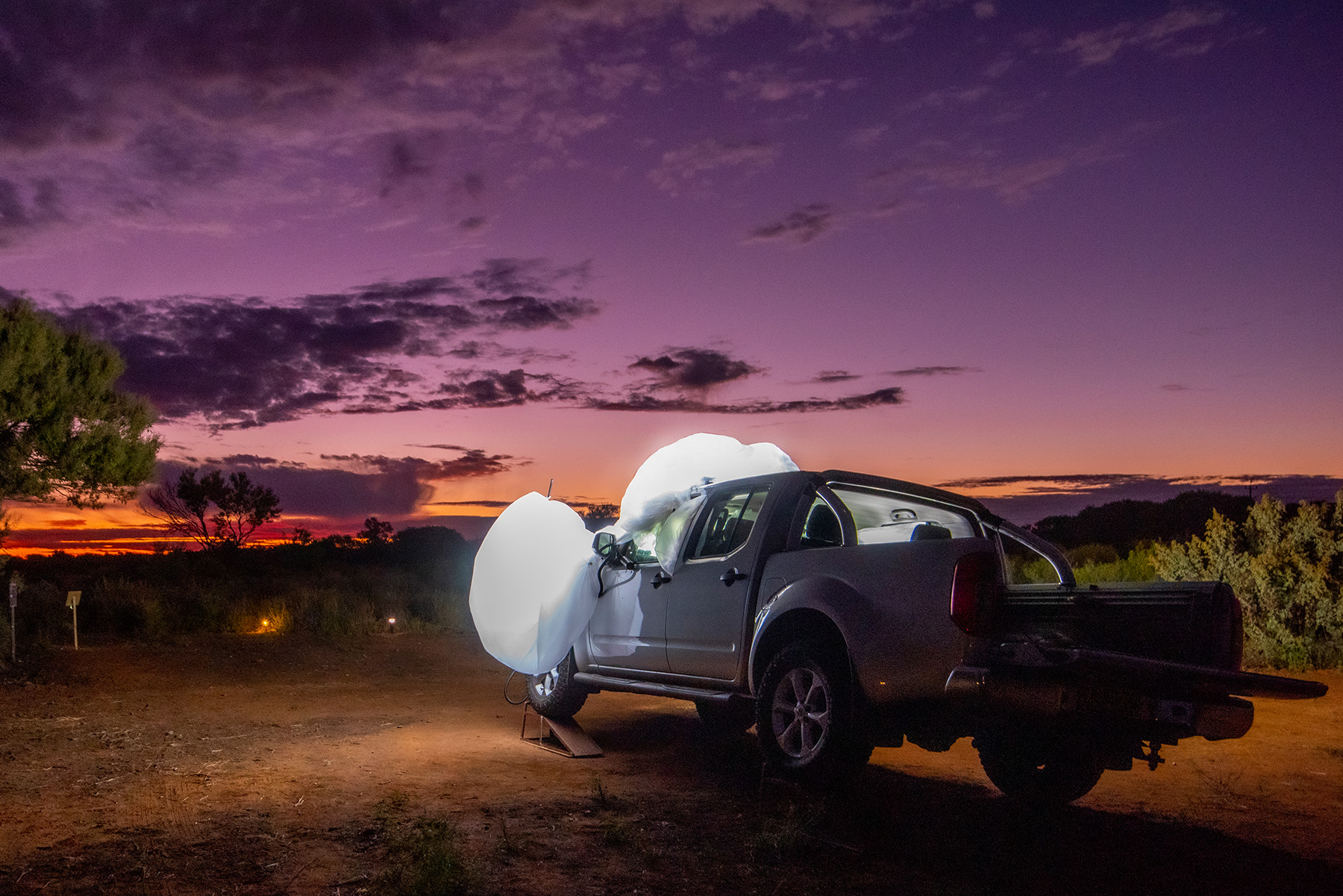
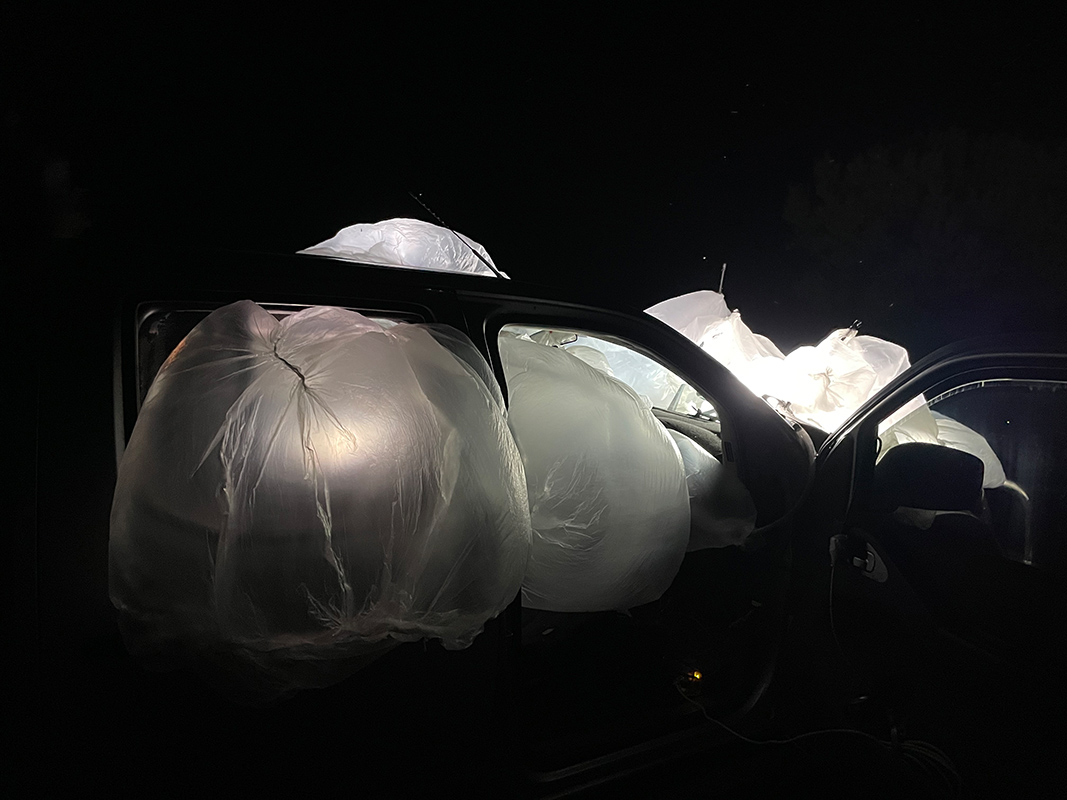
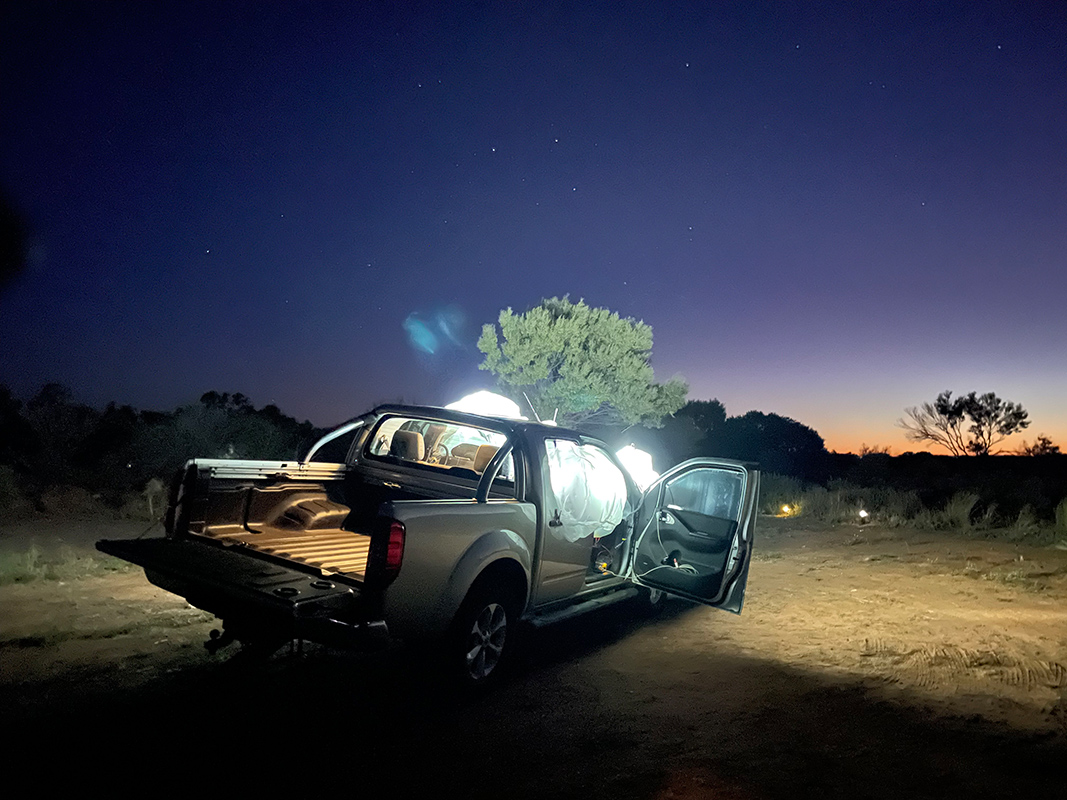
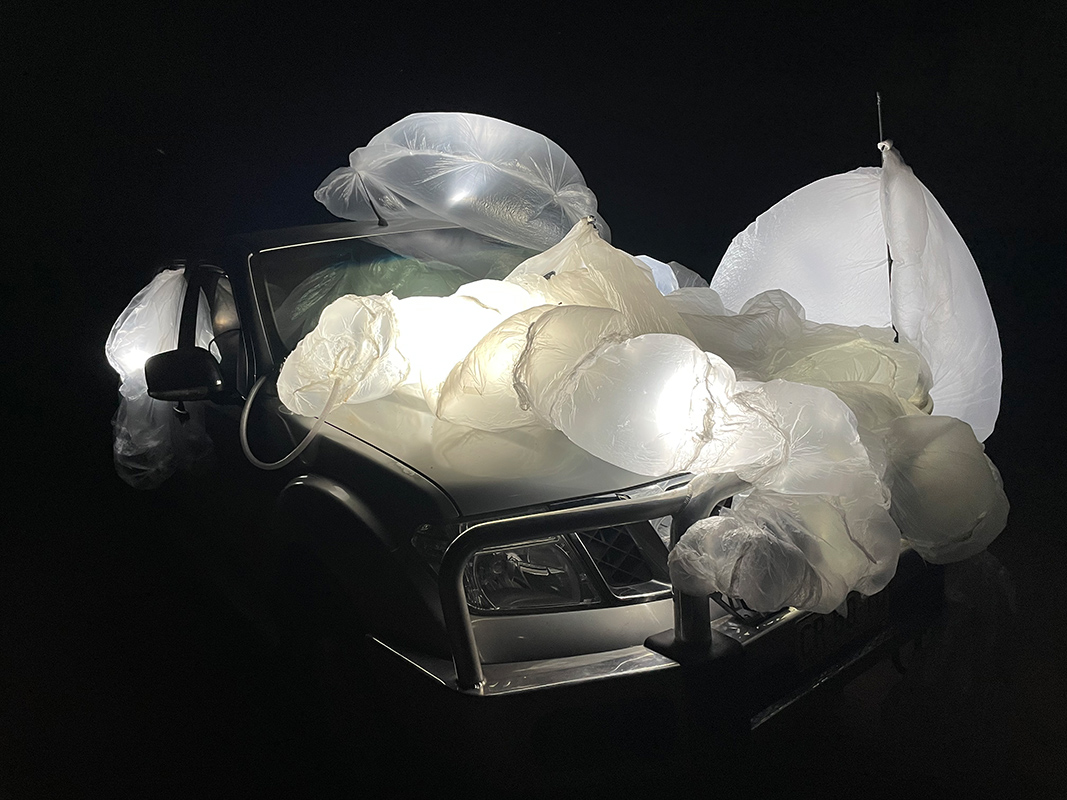
A gleaming silver pick-up truck is propped up on ramps on the passenger side, tilted at an angle of 25 degrees. The empty truck bed draws the viewer’s gaze through the interior towards the front of the vehicle. Inflated organic forms made of semi-transparent plastic sheeting proliferate across the interior, bonnet, roof and side door. They emerge from the windows, envelop the bodywork and spread across the headlights, windscreen wipers and antennas.
What initially appears to be an airbag explosion spiralling out of control reveals itself, on closer inspection, as a fragile, living structure. Irregular patches and rough white seams are visible on the plastic surfaces. Illuminated from within, the tubes and floating bladders resemble organs threaded with veins and nerves, twisting like intestines and proliferating like monstrous fungi. Their delicate skins tremble and shift in response to the slightest draught. This alien growth has taken possession of the vehicle, adding an organic, bodily dimension to its massive metal structure.
In the Australian Outback, the pick-up truck is a practical and ubiquitous means of transport. With its width and weight, it also embodies masculinity, dominance and the spirit of conquest. In Plumbumbarum, the vehicle is immobilised, distorted and thrown off balance. Its radiant protrusions transform it into a surreal, breathing structure composed of metal, plastic sheeting, light and air.
Conceived for a nocturnal exhibition outside the mining town of Broken Hill, the installation also alludes to the town’s contamination by lead dust. The heavy metal lead (Latin: plumbum) causes damage to the brain and internal organs.
In the world of fantasy games, Plumbumbarum is the name of a spell that makes an opponent’s arms heavy, slowing down both thought and movement. The sculptural assemblage explores this burden in both a literal and metaphorical sense, counteracting heaviness with playful, light-filled air sculptures.